
Why optics lead times stopped being predictable
Transceivers used to be the easy line on a bill of materials. Several things changed at once, and buyers are still adjusting.
Read thisPopular: GPUsTransceivers DDR5 RDIMMRack servers
Memory pricing moves in cycles, and the signals worth watching are not the ones that make headlines.
Industry insight · 21 April 2026 · Parade Wave desk
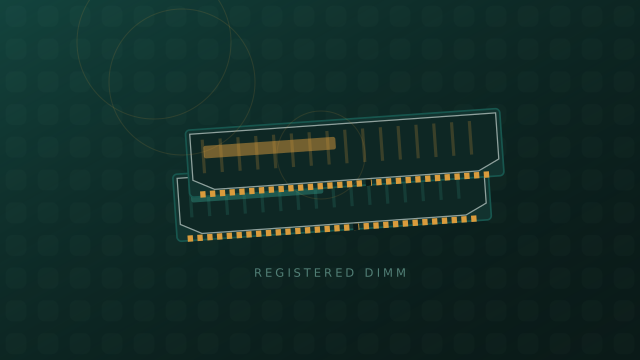
Memory pricing moves in cycles, and the signals worth watching are not the ones that make headlines.
Server memory is the most price-volatile line most buyers deal with, and the swings are large enough to change whether a project is approved. Being roughly right about direction matters more than being precisely right about price.
Capacity decisions made by the three large manufacturers set the ceiling and the floor, and they are announced quarters ahead of the effect. When wafer starts shift toward high-bandwidth memory for accelerators, conventional DDR5 supply tightens with a lag of several months.
Platform transitions matter more than most buyers expect. As installed bases move from DDR4 to DDR5, demand for the older generation does not disappear, it concentrates, and prices for legacy modules can rise even as new-generation prices fall.
We requote memory freely and without fuss for exactly this reason. A stale price helps nobody.
Questions about anything here? The sales desk answers technical questions without requiring a purchase order first. Call +971 4 385 2200 or write to sales@paradewave.ae.
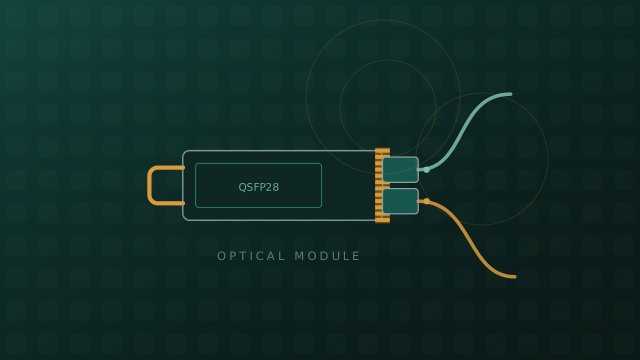
Transceivers used to be the easy line on a bill of materials. Several things changed at once, and buyers are still adjusting.
Read this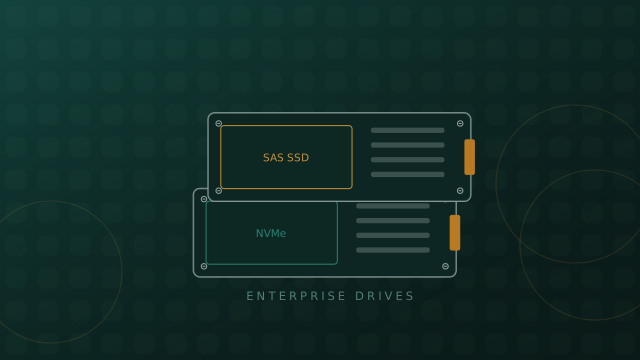
The physical shape of an enterprise SSD is now a longer-lived decision than the capacity you choose.
Read this
Independent distributors fill real gaps in the supply chain. Here is how to tell a good one from a broker with a website.
Read this